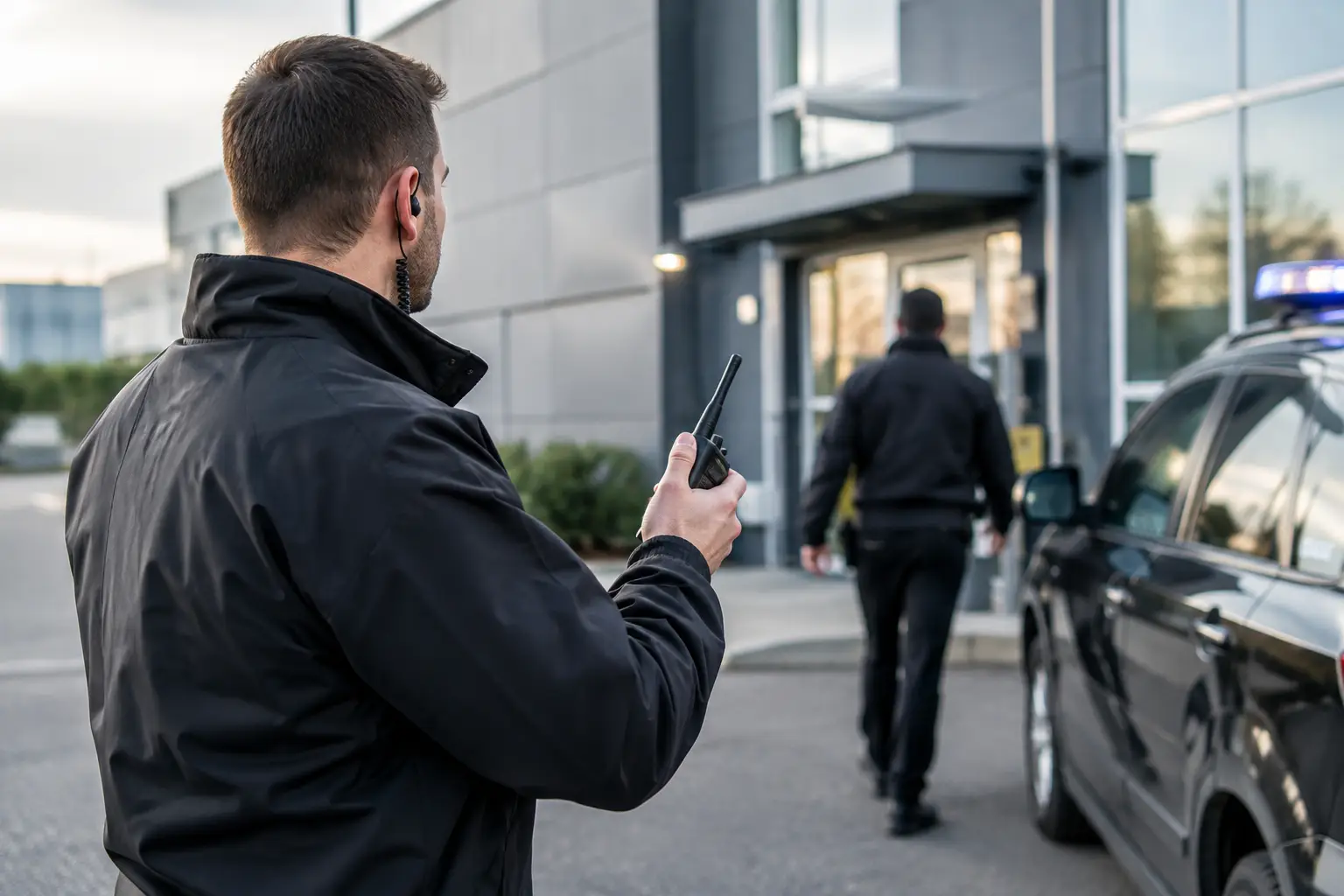


The pressure on event day rarely starts when guests arrive. It starts when a supplier vehicle is delayed at the gate, a guest list changes at short notice or an unplanned crowd forms around an entrance. Professional event security services give organisers control over these moments, protecting people, property and the experience they have worked hard to create.
For corporate functions, public events, exhibitions, sporting fixtures and private venues, security should support the operation rather than sit apart from it. The right plan combines visible deterrence, calm customer service, controlled access and clear incident response, delivered by officers who understand the site and the event objectives.
Event security services begin before the gates open
A successful security operation is planned around the reality of the event, not a standard staffing number. A small, ticketed awards evening in a managed venue presents different risks from a public-facing festival, a trade exhibition or a high-profile product launch. Attendance, venue layout, access points, event timings, alcohol provision, VIP attendance and the surrounding area all influence the appropriate level of coverage.
A pre-event assessment should establish where people will arrive, queue, park and leave. It should also identify restricted areas, contractor access routes, emergency exits, cash or equipment storage, vulnerable points in the perimeter and any neighbouring businesses or residents that may be affected. This creates a practical deployment plan rather than a generic security presence.
Good planning also defines authority. Event managers, venue teams, catering staff, production crews and security officers must know who can make decisions when conditions change. If an entrance needs to close, a guest is refused access or an evacuation is required, delay and mixed messages can create more risk than the original issue.
Match the security plan to the event risk
The aim is not to make every event feel heavily controlled. It is to apply proportionate measures that give organisers confidence without making legitimate guests feel unwelcome. A discreet corporate reception may need professional front-of-house officers, guest-list management and patrols around vehicle access. A busy public event may require stronger perimeter control, queue management, bag-check procedures, stewarding and dedicated incident support.
Risk can also change during the day. Weather, transport disruption, a popular speaker, a late-running programme or social media attention can materially alter crowd behaviour. An experienced provider plans for these possibilities and maintains communication with the event lead so resource can be redirected quickly where needed.
Put the right people in the right positions
Security officers are often the first people an attendee sees and the last people they encounter when leaving. Their conduct affects the reputation of the organiser and venue. Officers need to be alert and authoritative, while remaining approachable, well presented and capable of giving clear information under pressure.
This is particularly relevant at business events where reception areas, registration desks and meeting spaces are part of the guest experience. Officers can assist with directing visitors, checking credentials and managing access to private areas without creating an unnecessarily formal atmosphere. At larger or more complex events, licensed security personnel can provide the operational control needed to manage searches, entry points, incidents and ejections appropriately.
Specialist personnel should be selected where the risk justifies it. Dog handling can provide a strong visible deterrent and support perimeter patrols at open sites or large venues. Mobile supervisors can provide oversight across multiple entrances or event zones. Close co-ordination between officers, venue management and technical teams helps ensure that security measures complement, rather than obstruct, the event programme.
Consistency matters as much as headcount. A well-briefed team that understands the site, audience and escalation process will usually deliver better control than a larger team with unclear responsibilities. This is why shift briefings, position instructions and supervisor checks are central to dependable delivery.
Control access without creating unnecessary friction
Most event incidents begin with a failure of access control: an uninvited visitor enters through a side door, a contractor arrives without verification, or an authorised guest moves into a restricted area. Managing this effectively requires more than placing an officer at the main entrance.
Access arrangements should separate guests, staff, suppliers and VIPs where practical. Credentials, guest lists, wristbands or passes should be agreed in advance and applied consistently. Back-of-house doors, loading areas and fire exits need particular attention, especially while contractors are moving equipment in and out.
Queue management also deserves careful planning. Long queues can cause frustration, block public walkways and make people more likely to bypass controls. Security officers should have a clear approach for directing arrivals, assisting attendees with additional needs and responding if crowd density begins to increase. The right arrangement depends on venue capacity, expected arrival patterns and whether checks are required at the point of entry.
Technology can support this work. CCTV monitoring, radio communications, access-control systems and temporary surveillance can improve situational awareness, particularly across larger sites. Technology is most effective when it is backed by officers who can assess what they are seeing and respond in person when required.
Prepare for incidents, even when none occur
No organiser wants security to become the focus of an event. However, a calm and capable response is essential if someone becomes unwell, a dispute develops, an alarm activates or an evacuation is necessary. Security personnel should understand the emergency arrangements, assembly areas, communication channels and handover procedures relevant to the venue.
The response plan should cover both minor disruption and serious incidents. A lost pass, parking disagreement or intoxicated attendee may be resolved discreetly through early intervention. More serious matters may require liaison with emergency services, protection of evidence, controlled evacuation or the isolation of an area. In each case, officers need to record what happened accurately and inform the appropriate client contact.
For multi-day events, daily review is valuable. Changes to footfall, recurring access issues or new concerns raised by staff can be addressed before they become established problems. This operational feedback is one of the main advantages of using a security partner that remains accountable throughout the event, rather than simply supplying personnel.
Balance visible deterrence with guest experience
Visible security reassures many attendees, especially where valuable equipment, high visitor numbers or public access are involved. Yet a highly conspicuous deployment is not always the right choice. At a private client event or premium hospitality venue, a more discreet approach may protect the atmosphere while still maintaining strong control behind the scenes.
The balance depends on the event's profile and risk assessment. Uniformed officers at entrances can deter unauthorised access and provide a clear point of assistance. Plain-clothes coverage may be appropriate for sensitive areas, executive functions or situations where overt security could unsettle guests. The key is to agree the desired security presence before the event, not make that decision when the room is already filling.
Choose a provider that can support the full operation
Event security should not be treated as an isolated booking. It often overlaps with guarding, concierge duties, mobile patrols, key holding, alarm response and protection for the venue before and after the event. A provider with wider operational capability can coordinate these requirements under one plan, reducing gaps between services and simplifying communication for the client.
Chevron Security works with organisers, venue teams and commercial property decision-makers to build tailored coverage around the event, its people and its premises. This can include trained officers, specialist personnel, supervisory support and technology-enabled measures where they add clear value.
When appointing a provider, ask how they assess risk, brief officers, supervise delivery and report incidents. Confirm how they would respond to last-minute changes, whether they can scale resource if attendance increases, and how their team will work alongside venue staff and emergency services. These practical details are usually more revealing than a headline staffing figure.
The best security operation is often one guests barely notice. They remember an event that started on time, felt well managed and allowed them to focus on why they were there. Careful preparation and professional on-site control make that outcome far more likely.