

A stolen generator, plant attachment or cable drum can stop work long after the item has left the site. Labour may be left waiting, replacement equipment may not be immediately available, and a claim can bring further administration and excess costs. Knowing how to prevent construction theft is therefore not simply a matter of protecting equipment. It is part of protecting programme certainty, site safety and commercial performance.
Construction sites are attractive targets because their risks change daily. Perimeters move, deliveries arrive at varied times, subcontractors rotate and valuable assets can be left exposed overnight. A practical security plan needs to reflect that reality, combining physical measures, disciplined site processes and a response capability that does not depend on luck.
Start with a site-specific theft risk assessment
Security should begin before the first delivery arrives. A site-specific risk assessment identifies what is most likely to be targeted, when exposure is highest and where a criminal could gain access or remove property without being challenged.
Review the site boundary, neighbouring land, public footpaths, access roads and any areas concealed from view. Consider whether incomplete fencing, temporary gates, scaffolding or adjacent vacant buildings create an easier route in. Also assess working patterns. A central urban redevelopment site with frequent pedestrian traffic has different risks from an isolated infrastructure project or a housing development that becomes quiet after 5 pm.
The assessment should identify high-value and high-demand items, including plant, fuel, copper cable, tools, generators and materials that can be removed quickly. It should also account for arson, vandalism and unauthorised occupation, as these risks can overlap with theft. The result should be a clear plan showing who is responsible for each control, rather than a generic checklist left in a site folder.
Secure the perimeter before relying on technology
A visible, well-maintained boundary remains one of the strongest deterrents. Fencing should be appropriate to the site's risk profile, free from gaps and checked routinely for signs of cutting, lifting or forced entry. Gates require the same attention. A locked gate is of limited value if keys, codes or access fobs are widely shared without control.
Lighting can make an approach less attractive, particularly around gates, compounds, fuel stores and plant parking areas. It needs to be positioned carefully: poorly directed lighting can leave blind spots, disturb neighbours or provide only the appearance of protection. For remote sites, temporary lighting and monitored surveillance can provide a more proportionate option than permanently installing infrastructure.
Signage also has a role, but it should support real measures rather than replace them. Clear warnings about controlled access, surveillance and security patrols tell would-be intruders that the site is actively managed. They are most effective when the site looks organised and officers or patrol vehicles are visibly present.
Control access throughout the working day
Many thefts are enabled by people entering legitimately, or appearing to do so. Busy delivery periods and shift changes can create opportunities for unauthorised individuals to follow vehicles through a gate or blend into site activity. Access control needs to be consistent without slowing essential work unnecessarily.
A sign-in process, verified identification and a clear visitor escort policy establish accountability. Delivery drivers should know where to report, where they may wait and who is authorised to receive materials. Where the project warrants it, security officers can manage the gatehouse, check credentials, record vehicle movements and challenge unusual activity professionally.
Access permissions should be removed when staff, agency workers or subcontractors leave the project. Site teams should also avoid sharing gate codes through informal messaging groups. Codes are easily passed on and difficult to control once they have circulated. A managed fob, pass or nominated-contact process creates a more reliable record of who can enter.
Keep delivery and collection records aligned
Materials and equipment frequently leave site for legitimate reasons, which is why exit controls matter. Collection notes should be checked against authorised paperwork, particularly for plant, cable, fuel and high-value tools. If a driver, vehicle registration or collection time differs from the expected details, the matter should be verified before property is released.
This process is not about treating every delivery driver with suspicion. It provides a straightforward way to protect suppliers, subcontractors and the principal contractor from avoidable disputes.
Protect plant, tools and materials at their point of use
Theft prevention is strongest when assets are harder to identify, move and sell. Keep an up-to-date register of plant, attachments, tools and stored materials, including serial numbers, photographs and ownership details. Marking equipment visibly and covertly can make resale more difficult and supports recovery if property is found.
At the end of each shift, plant should be parked in a defined, illuminated area where practical. Remove keys, isolate equipment and use approved immobilisation devices. Smaller items should be stored in secure containers or locked compounds, with valuable stock positioned away from perimeter fencing. Fuel tanks require secure caps, protection from vehicle access and regular stock checks.
There is a balance to strike. Moving every item into a central compound may be impractical on a large, active scheme, and overcomplicated procedures are often bypassed when deadlines are tight. Focus first on assets that are portable, valuable or regularly targeted, then build controls around the way the site genuinely operates.
Use surveillance that leads to action
CCTV, temporary towers, intruder detection and remote monitoring can extend visibility beyond working hours. Their value depends on design, coverage and response arrangements. A camera pointed at a gate may provide useful evidence after an incident, but it may not prevent the loss if there is no one available to verify an activation or attend the site.
For higher-risk projects, monitored technology can be integrated with mobile patrols, key holding and alarm response. When an alarm is activated, trained operators can assess the situation and deploy a response where required. This is especially useful for sites that are not suitable for permanent guarding but still need reliable out-of-hours protection.
Technology should be reviewed as the project develops. A camera position that covered a materials compound in the early stages may become obstructed by new structures, hoarding or stored equipment. Regular checks ensure the system remains relevant rather than becoming a false reassurance.
Match guarding to the risk and phase of the project
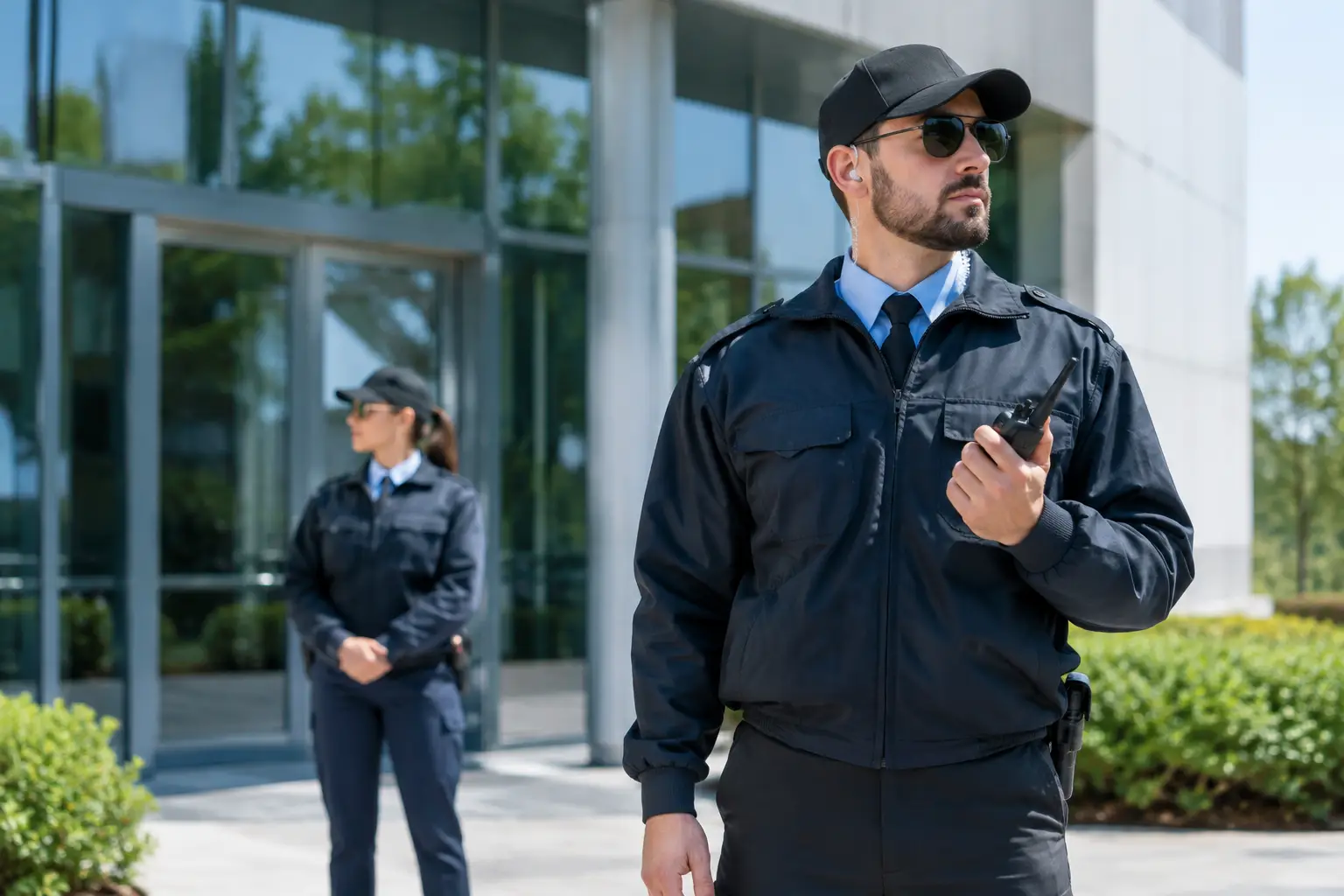
A professional security officer provides more than a visible presence. On a construction site, officers can manage access, conduct patrols, inspect fences and locks, monitor deliveries, report defects and maintain an auditable record of events. Their observations can also reveal early warning signs, such as repeated interest in a particular item, damaged hoarding or vehicles arriving outside expected hours.
The appropriate level of guarding depends on the exposure. A short-term project may need mobile patrols and alarm response, while a major development with valuable plant, multiple entrances and public interface may justify a dedicated officer or dog handling presence. The most effective arrangement is usually layered: physical security and technology supported by people who can assess issues and take action.
Security provision should also be scaled around predictable pressure points. Bank holidays, Christmas shutdowns, handover periods and phases where plant or materials are concentrated on site all deserve additional consideration. Reducing cover at these moments can create an avoidable gap.
Build theft prevention into everyday site management
The best controls fail if teams do not know what is expected of them. Include security procedures in inductions and toolbox talks, covering gate discipline, key control, suspicious activity reporting and the correct storage of tools and equipment. Supervisors should reinforce the message through routine checks, not only after a theft has occurred.
Encourage personnel to report concerns promptly. A damaged lock, unfamiliar vehicle or person photographing plant may be innocent, but recording and checking it allows patterns to be recognised. Clear escalation routes help staff act with confidence, particularly when the site is busy and responsibility can otherwise become blurred.
After any incident or attempted intrusion, review what happened quickly. Check whether the boundary, lighting, records, access arrangements or response process needs to change. A measured review prevents repeated loss and demonstrates that site security is being managed with the same discipline as other operational risks.
Chevron Security can develop coordinated construction-site protection that combines trained personnel, mobile response and technology around the practical demands of your project. The right measures will vary by location, programme stage and asset profile, but a visible, accountable security plan gives your team a stronger position from the first delivery to final handover.