

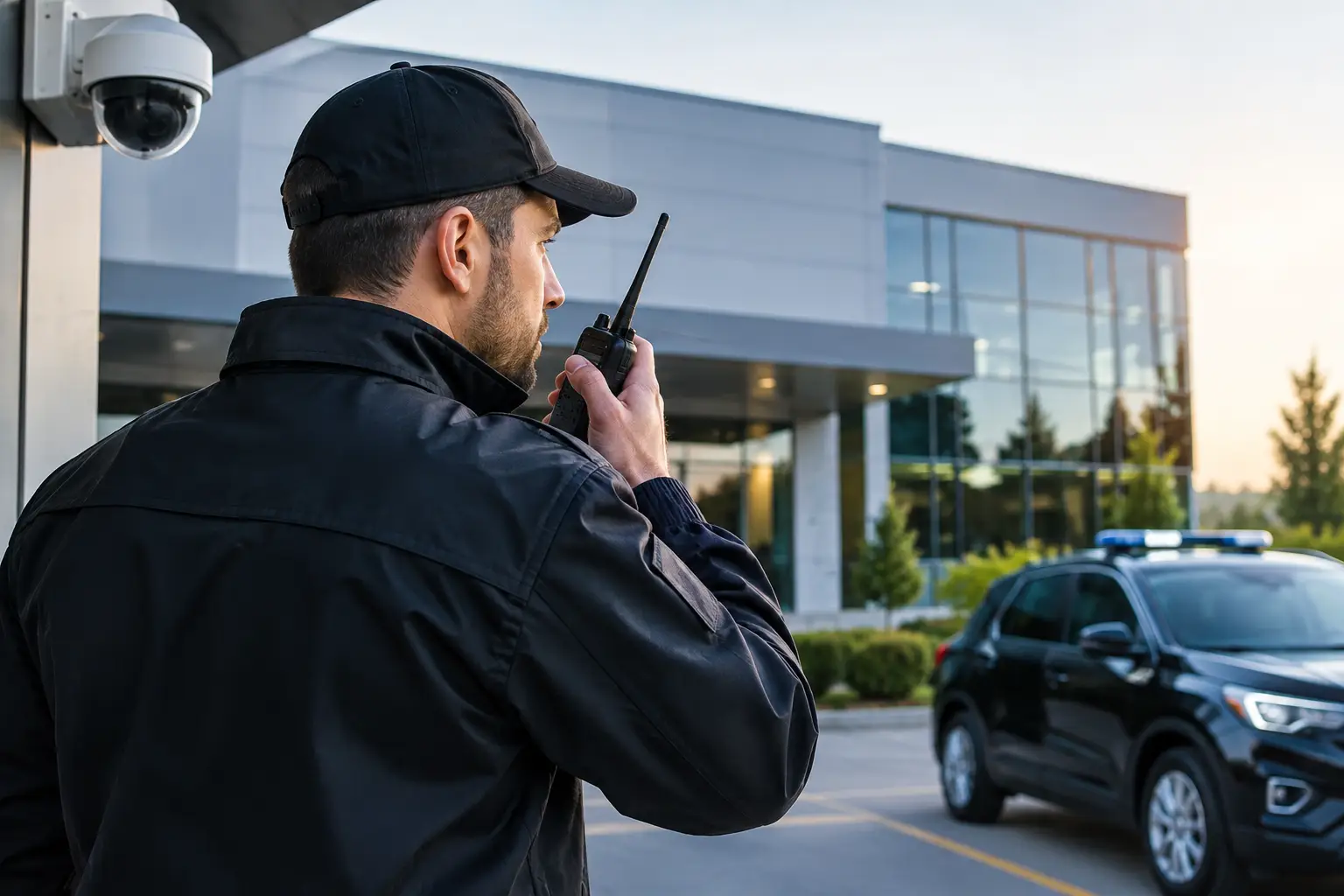
An alarm activation at 02:15 is not simply a notification. For a facilities manager or property owner, it may indicate attempted entry, damage, a fire-related concern, a system fault or a vulnerable site left without protection. A professional alarm response service turns that uncertainty into a controlled process, with trained security officers attending, assessing the situation and taking appropriate action on your behalf.
For commercial premises, vacant properties, construction sites and multi-location estates, the difference is significant. Rather than placing responsibility on an employee or director to attend an incident out of hours, a dedicated response provider manages the first attendance, preserves safety and keeps decision-makers informed.
What alarm response involves
Alarm response is the attendance of a trained security officer following an activation at a protected site. The officer attends under agreed instructions, investigates the apparent cause of the alarm from a safe position and takes proportionate action based on the circumstances.
The service usually operates alongside key holding. Authorised keys or access credentials are held securely, enabling the attending officer to gain access where it is safe and necessary to do so. This is particularly valuable where a building is unoccupied overnight, at weekends or during holiday periods.
A proper response is not limited to arriving at the gate and confirming that an alarm is sounding. It requires calm judgement. The officer must identify signs of forced entry, assess whether people remain on site, liaise with the alarm receiving centre, police or emergency services where required, and ensure the premises can be left secure. Every action should be recorded clearly for the client.
Why businesses should not rely on staff call-outs
Many organisations initially nominate a manager, caretaker or member of the leadership team as the out-of-hours keyholder. This can appear economical, but it transfers risk to individuals who may be travelling alone to an unknown situation with no security training or support.
An alarm may be false, but it may also be connected to criminal activity, a break-in, water damage or a fire safety issue. Asking staff to investigate creates personal safety concerns and can lead to inconsistent decision-making. It also leaves the business dependent on whether the nominated person is available, nearby and able to attend.
A contracted alarm response arrangement provides continuity. There is a defined escalation plan, trained personnel and a record of attendance. This helps maintain operational control across weekends, nights and periods of absence, without placing unreasonable demands on internal teams.
What happens when an alarm is activated?
The exact process should reflect the property, risks and agreed assignment instructions. However, a reliable alarm response follows a clear sequence: notification, attendance, assessment, escalation where necessary, securing of the site and reporting.
Once an activation is received, the response officer is deployed to the location. On arrival, they check the external perimeter for signs of damage, unauthorised access or suspicious activity before entering. This initial assessment matters. An officer should never compromise personal safety by walking directly into a potentially unsafe environment.
If there is evidence of a crime, the officer follows the agreed procedure and contacts the relevant emergency service or police as appropriate. They can preserve the scene, prevent further access and wait for attending authorities. If the activation is caused by a fault, an unlocked door or another non-criminal issue, the officer can take the necessary steps to secure the premises and notify the relevant contact.
Where access is required, keyholding enables the officer to reset alarms, check affected areas and arrange emergency support, such as boarding up, locksmith attendance or contractor call-outs. The client receives a detailed incident report setting out the time of attendance, observations, actions taken and any recommended follow-up.
The value of a site-specific response plan
No two sites present the same risks. A city-centre office, a logistics yard, a retail unit and a vacant building require different response instructions. Generic procedures can create gaps at the point when certainty matters most.
A site-specific plan should identify approved entry routes, key locations, alarm panel details, escalation contacts and any known hazards. It should also set out the authority the response officer has to arrange emergency works, contact the police, isolate access points or request additional guarding.
For higher-risk locations, the plan may include mobile patrols, static guarding after an incident or dog handling support. A property that has suffered forced entry, for example, may need a visible officer presence until repairs are completed. A rapid response is useful, but the ability to maintain protection after the initial attendance is what prevents a short-term incident from becoming a prolonged exposure.
Alarm response and false activations
False activations are common, particularly where systems have not been maintained, staff have not been trained on setting procedures or environmental factors affect sensors. They should not be dismissed as an inconvenience. Repeated false alarms consume time, increase costs and can lead to complacency among those responsible for attending.
A professional response provider can help identify patterns through incident reporting. If activations repeatedly occur in the same zone, at the same time or following a particular operational activity, the issue can be referred to the alarm maintainer or addressed through site procedures.
There is a balance to strike. Reducing avoidable call-outs is sensible, but reducing attendance standards to save money is not. Until the cause is confirmed, an activation should be treated as a potential security event. The appropriate level of response depends on the property, its contents, local crime risk, occupancy and insurer requirements.
Choosing an alarm response provider
The right provider should offer more than a promise to attend. Decision-makers should understand how attendance is managed, who holds the keys, how officers are briefed and what happens if an incident requires further support.
Look for clear assignment instructions, trained and licensed personnel, secure key management, documented reporting and a realistic plan for escalation. Coverage should also be considered carefully. A provider serving multiple regions must have the operational capability to support your specific sites, rather than relying on a broad claim of national availability.
It is also worth asking how the service connects with wider security arrangements. Alarm response is most effective when it forms part of a coordinated programme that may include mobile patrols, manned guarding, concierge security, CCTV monitoring and vacant-property protection. This gives one accountable provider a fuller picture of site risks and agreed procedures.
Chevron Security provides alarm response and keyholding as part of integrated security programmes tailored to commercial sites, estates, developments and events. The objective is straightforward: ensure that when an alarm is activated, a trained professional takes control of the situation promptly and communicates clearly with the people responsible for the premises.
Maintaining control after an incident
The quality of alarm response is often judged after the officer leaves. A concise report gives property and operations teams the information needed to make decisions the following morning: whether access points were damaged, whether police attended, whether an alarm engineer is required and whether additional security is needed.
This record supports accountability, helps identify recurring issues and provides useful evidence for insurers, landlords or managing agents. It also enables security arrangements to improve over time. A site with repeated perimeter alarms may need better lighting or patrol coverage, while frequent internal activations may point to an access-control or maintenance problem.
The strongest alarm response arrangements are not reactive in isolation. They use each attendance to improve the security position of the property. When the next activation occurs, the response is then quicker, better informed and more capable of protecting your people, premises and assets.