

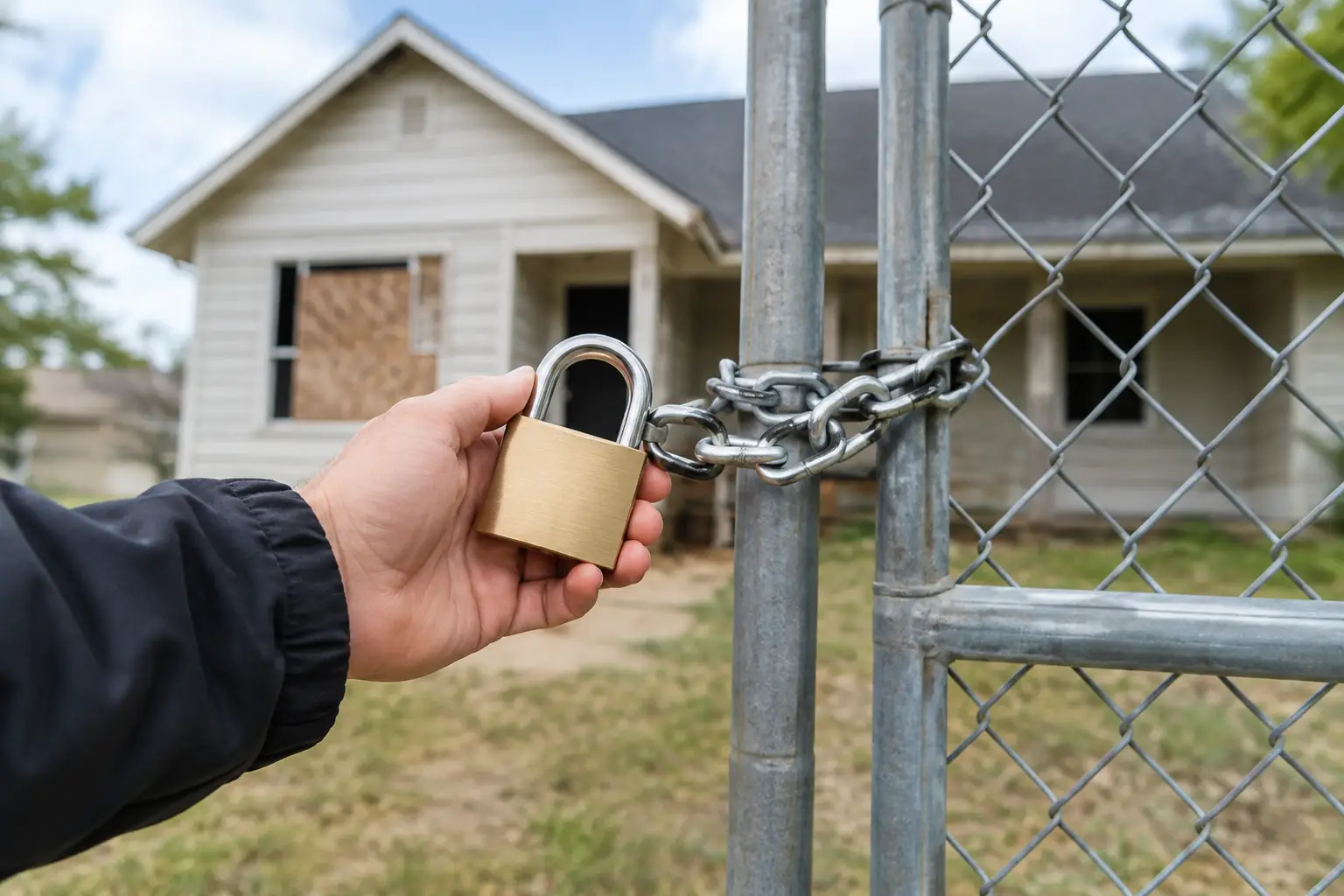
A vacant property can become a target within days. Once a site appears unoccupied, opportunistic trespassers, vandals and thieves may test its boundaries, while undetected water leaks, fire risks and damage can quickly become expensive liabilities. Knowing how to secure vacant properties means putting control around the premises before an incident exposes a gap.
For facilities managers, landlords, developers and receivership professionals, the right approach is rarely a single measure. Boarding alone may delay entry but cannot confirm what is happening on site. CCTV can record activity but may not prevent a determined intruder. Effective vacant-property security combines physical protection, visible deterrence, inspection and a reliable response plan.
How to secure vacant properties: begin with a site risk assessment
Every vacant building has a different risk profile. A town-centre retail unit, an empty warehouse on an industrial estate and a partly completed construction project face different threats, access points and response requirements. Security should therefore begin with a practical assessment of the site rather than a standard package.
Inspect the entire perimeter, including rear access routes, roof access, service yards, loading bays, external plant areas and neighbouring boundaries. Identify weak doors, damaged fencing, unsecured windows, accessible ladders and areas concealed from public view. Consider whether the building contains copper, plant, fixtures, stock, tools or personal data that could attract theft.
The assessment should also consider hazards that are not caused by crime. Vacant properties can suffer from burst pipes, water ingress, fly-tipping, arson and deterioration that goes unnoticed without regular attendance. If the premises remain empty for an extended period, insurers may require specific controls, such as regular inspections, documented visits or maintained alarm systems. Review policy conditions early rather than after a claim.
Make the site difficult to enter and easy to monitor
The first objective is to prevent straightforward access. Any obvious point of entry sends the wrong message: that the property is not being actively managed. Repair damaged doors, windows, gates and fencing promptly, and remove items that could help someone gain access, such as loose pallets, skips, ladders or stored materials near the building.
Depending on the property, temporary steel screens, security doors, anti-climb measures and perimeter fencing may be more appropriate than timber boarding. These options can provide a stronger and more professional deterrent, particularly where a site will remain vacant for several months. The right choice depends on the building's condition, planning constraints, public-facing appearance and the likelihood of repeat attempts to gain entry.
Lighting also matters. Well-positioned external lighting makes access routes more visible and supports patrols and CCTV coverage. It should be planned carefully, however, as lighting directed towards roads, neighbouring homes or public spaces can create complaints without improving site security.
Clear warning signage reinforces the message that the property is protected, monitored and subject to response. Signage should be accurate. Claims of surveillance or patrol coverage that do not exist can undermine the credibility of the wider security arrangement.
Use technology as part of a managed response plan
Monitored intruder alarms, CCTV and remote video surveillance can provide valuable coverage when a building is empty. They are particularly useful outside working hours, across large estates or where physical attendance at every location is not commercially practical. Technology is most effective when someone is responsible for reviewing alerts and acting on them.
A camera that records an intruder may assist after an incident, but it does not necessarily stop damage, theft or unlawful occupation. Monitored systems should be paired with a clear escalation process: who receives alerts, who holds keys, when a mobile response officer attends and when the police or emergency services should be contacted.
For higher-risk locations, remotely monitored CCTV can allow trained operators to assess activity in real time and issue an audio warning where appropriate. This can avoid unnecessary call-outs while ensuring genuine incidents receive immediate attention. It is a useful option for isolated premises, construction sites and properties with repeated trespass concerns.
Technology should be maintained throughout the void period. A fault notification, low battery warning or loss of communications must not sit unresolved. A security system that appears active but cannot send an alarm creates a false sense of protection.
Establish inspections, patrols and key holding
Regular physical inspections remain essential, even where technology is in place. A trained officer can identify damage to fencing, signs of attempted entry, water leaks, fire hazards, hazardous waste or vulnerable areas that are outside camera coverage. Visits also provide a visible deterrent, especially when their timing is varied rather than predictable.
Inspection frequency should reflect the site's risk. A low-value, well-secured office may require less frequent attendance than a vacant retail unit in a busy location or a development site containing valuable equipment. Weather conditions, previous incidents, local antisocial behaviour and the building's condition should all influence the schedule.
Each visit should be documented with clear findings, actions taken and, where useful, photographic evidence. This creates accountability and gives property decision-makers a reliable record for internal governance, insurers and stakeholders.
Key holding and alarm response are equally important. Leaving keys with a member of staff who lives nearby may seem convenient, but it can expose them to unnecessary risk and leave the business without cover during holidays, sickness or out-of-hours incidents. Professional key holding provides a controlled process for alarm activations, emergency access and contractor attendance, with trained personnel available to attend the property when needed.
Control contractors and temporary access
Vacant does not always mean inactive. Cleaning teams, surveyors, maintenance contractors, utilities providers, estate agents and prospective tenants may all need access. Unmanaged access can create as much risk as an unsecured entrance, particularly if keys are copied, doors are left open or alarm procedures are misunderstood.
Keep an up-to-date access register that records who has authority to enter, why they are attending and when access was returned. Change codes when staff, contractors or occupiers move on. Where the site is high risk, arrange escorted access or provide a security officer to oversee visits.
Before any contractor leaves, confirm that the building is secure, alarms are reset and no new vulnerability has been introduced. A simple job such as replacing a window, draining a system or removing equipment can leave gates open or services exposed if handover is not properly controlled.
Protect against unlawful occupation and fire risk
Unlawful occupation can be particularly disruptive and costly. The longer it remains undetected, the more complex recovery may become. Regular attendance, immediate investigation of alarm activations and prompt repairs to attempted entry points reduce the opportunity for a property to appear abandoned.
Fire risk also requires active management. Remove combustible waste, secure bins and skips, isolate non-essential utilities where appropriate, and ensure emergency contact details are current. The precise measures will depend on the building and its fire risk assessment, but vacant premises should never be treated as risk-free simply because they are unoccupied.
Where there is a heightened risk of arson, repeated intrusion or dangerous site conditions, a permanent or temporary on-site security presence may be justified. Manned guarding, mobile patrols and specialist dog handling can provide a stronger visible deterrent than technology alone. The trade-off is cost, so this level of coverage is usually best focused on the highest-risk periods, locations or assets.
Build a proportionate security programme
The strongest vacant-property arrangements are layered and proportionate. A short void between tenants may need secure doors, alarm monitoring and scheduled inspections. A vacant commercial estate, redevelopment site or building containing high-value assets may require a more comprehensive programme combining guarding, mobile response, key holding, CCTV and access control.
Chevron Security can assess vacant sites and coordinate trained officers, mobile patrols, alarm response and technology-enabled protection within one managed service. That coordinated approach helps ensure that an alarm, inspection finding or incident report results in action rather than being passed between separate suppliers.
A vacant building does not need to become an unmanaged risk. When security is visible, monitored and supported by a dependable response, property teams can retain control of their assets until the site is occupied, sold, refurbished or returned to use.