

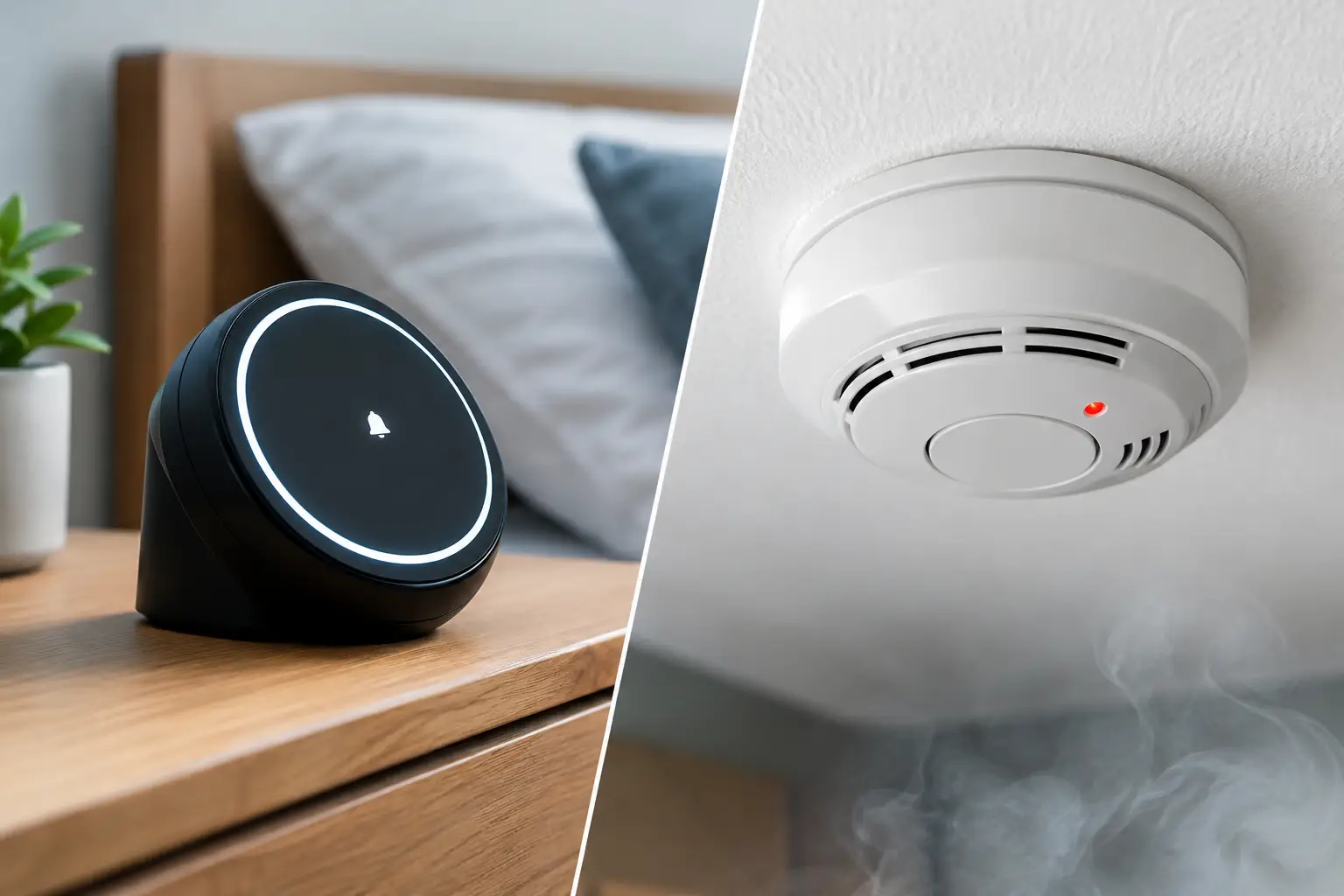
A fault, fire-safety defect or change in a building’s risk profile can leave property teams making decisions under pressure. The question of waking watch versus fire alarms is not simply about cost or convenience. It is about maintaining a reliable means of detecting fire, warning occupants and supporting safe evacuation while longer-term works are planned and completed.
For facilities managers, managing agents and responsible persons, the right approach depends on the building, the residents or occupants, the findings of the fire risk assessment and the time needed to reduce the underlying risk. A waking watch can provide immediate, human-led oversight. A suitable fire alarm system can offer a more permanent and scalable warning solution. Neither should be selected in isolation.
What a waking watch provides
A waking watch is a fire-safety measure involving trained personnel who continuously patrol a building or designated areas. Their purpose is to identify signs of fire, smoke or developing danger, raise the alarm without delay and support evacuation in accordance with the site’s emergency arrangements.
It is most commonly associated with residential and mixed-use buildings where concerns about external wall systems, compartmentation, fire doors or other defects have affected the original fire strategy. However, the principle can also apply wherever a temporary, enhanced human presence is required while fire precautions are reviewed or repaired.
The value of a waking watch is its active supervision. Officers can check vulnerable areas, identify obstructions on escape routes, observe changes in site conditions and escalate issues that an automatic system alone may not reveal. They can also provide a visible, reassuring presence for occupants during a period of heightened concern.
This does not mean a waking watch is a permanent substitute for resolving defects. It is an interim control. Its effectiveness depends on careful staffing, patrol frequency, clear communication arrangements, officer competence and management oversight. A poorly defined deployment can create false confidence rather than meaningful protection.
What fire alarms provide
A fire alarm system is designed to detect fire automatically or enable occupants to raise an alarm manually, depending on its design. It then provides an audible, and where appropriate visual, warning so people can follow the building’s evacuation procedure.
In the right setting, a properly specified, installed and maintained system can reduce reliance on constant human patrols. It can provide consistent coverage around the clock, record activations and faults, and integrate with other site controls where required. For larger or multi-storey premises, this consistency can be operationally valuable.
However, the phrase ‘install a fire alarm’ can oversimplify the decision. The system must be designed for the building’s fire strategy and risk profile. Detector locations, alarm audibility, management arrangements, testing, maintenance and the response to unwanted fire signals all matter. An alarm system also cannot repair unsafe compartmentation, remove combustible materials or compensate for blocked escape routes.
For many buildings, the best route is to assess whether an improved detection and warning system allows a waking watch to be reduced or withdrawn, while remedial works continue. That judgement should be evidence-led and recorded, rather than based on a preference for the lowest immediate cost.
Waking watch versus fire alarms: the operational difference
The key difference is simple. A waking watch relies on trained people to detect and respond to risk. Fire alarms rely primarily on technology to detect or communicate a fire event. Both require effective management, and both can fail if they are not matched to the site.
A waking watch is often faster to implement. Where a risk assessment identifies an urgent need for additional safeguards, personnel can be deployed while technical options are surveyed, approved and installed. This can be particularly useful where buildings are occupied, access is restricted or there is uncertainty around the final remediation programme.
Fire alarms generally offer a more sustainable solution where they are appropriate to the risk. Once commissioned and supported by planned inspection, testing and maintenance, they avoid the ongoing resource demand of round-the-clock patrols. Yet installation takes time. Surveys, design, resident or tenant communication, physical works and commissioning must be coordinated carefully, especially in occupied buildings.
Cost should be viewed across the full period of risk, not just the first month. A waking watch may have a lower initial barrier but can become expensive when needed over an extended period. A fire alarm installation can require greater upfront investment but may provide a more proportionate long-term control. The calculation must include the condition of the building and the remedial works still required.
Start with the fire risk assessment
Neither option should be chosen as a standard package. The responsible person should act on a suitable and sufficient fire risk assessment, supported where necessary by competent fire-safety specialists. The assessment should identify the specific hazard, who may be affected, the existing controls and the measures required to reduce risk to an acceptable level.
Questions that shape the decision include whether the building follows a stay-put or simultaneous evacuation strategy, the number and needs of occupants, the reliability of existing detection, the condition of escape routes and the nature of the identified defects. A high-rise residential building with concerns about its façade presents a different operational picture from a commercial office, a vacant site or a mixed-use development.
It is also essential to consider how people will respond when an alarm sounds. Clear instructions, appropriate signage, accessible communication and a tested evacuation plan are central to any fire-safety arrangement. Installing equipment without preparing occupants and site teams does not provide complete protection.
When a combined approach is justified
There are circumstances in which a phased or combined approach is the most responsible option. A waking watch may remain in place during fire alarm installation, while the system is tested, or while remedial works leave part of the building exposed. The watch can then be adjusted as controls become operational and the risk assessment supports change.
A combined arrangement may also be appropriate where alarm coverage is limited, where construction activity creates changing risks, or where officers are needed to manage evacuation and access in addition to fire observation. The aim is not to duplicate services unnecessarily. It is to avoid a gap in protection during a period of transition.
Operational planning should set out who is on duty, which areas are covered, how patrols are recorded, how alarms are raised, when emergency services are contacted and how incidents are reported to the client. It should also establish a review date. Temporary measures need regular reassessment as works progress and site conditions change.
Choosing a dependable provider
Where a waking watch is required, quality of delivery matters as much as the number of officers on site. Personnel need clear assignment instructions, site-specific induction, escalation routes and reliable supervision. They must understand the building layout, the fire strategy, the location of key risks and the action expected if smoke, fire or an obstruction is found.
For property portfolios, central reporting is equally valuable. Decision-makers need visibility of patrol completion, defects identified, incidents attended and any recurring issues that require wider action. This turns the waking watch from a simple staffing arrangement into an accountable safety control.
Chevron Security supports clients with trained waking watch personnel as part of coordinated site protection. The service can sit alongside concierge security, access control and wider operational coverage, helping clients maintain clear responsibility during complex or changing conditions.
Avoid treating either measure as a shortcut
The wrong decision is usually one made without a full understanding of the risk. Retaining a waking watch indefinitely without a plan for remediation can create significant cost and management pressure. Removing it too early, or assuming an alarm system resolves every identified issue, can expose occupants and property owners to unacceptable risk.
Keep the focus on the outcome: early warning, safe evacuation, informed response and a clear route to reducing the underlying hazard. Review controls after any material change, including construction works, alterations to occupancy, repeated alarm faults or an incident. A proportionate, professionally managed arrangement gives building teams the confidence to protect people now while working towards a safer long-term position.